
























November 20, 2026
Dcorra
November 23, 2026
,
Dcorra
Living Room Lighting Ideas: No Overhead Light, Low or High Ceilings
Quick answer: Light a living room in layers rather than with one big ceiling light: soft ambient light, task light where you read and an accent glow on walls or shelves, placed at different heights. With no overhead light, use table lamps, floor lamps and plug-in wall sconces spread around the room. With a low ceiling, choose a flush mount and keep at least 7 ft (210 cm) of headroom where people walk. With a high ceiling, add a chandelier sized to the room: length plus width in feet gives a rough diameter in inches.
The living room has to do more jobs than almost any other room. It is where you read, watch a film, have friends over and switch off at the end of the day, often all in the same evening. One ceiling light can't do all of that. It flattens the room, leaves the corners dim and is usually either too bright or not bright enough.
The good news is that the fix is the same whatever your ceiling looks like: build the light up in layers. What changes is where each layer comes from. Below is how to do it in a room with no overhead light, under a low ceiling and under a tall or vaulted one.
Start with three layers at three heights
Interior designers tend to plan a living room around three kinds of light:
- Ambient light is the general glow that lets you move around comfortably. It can come from a ceiling fixture, but also from wall lights and lamps that bounce light off the walls and ceiling.
- Task light is focused light where something happens: a lamp beside the reading chair or at the end of the sofa.
- Accent light is the low, decorative layer that gives the room depth: a lamp on a console, light on a shelf, a pair of sconces either side of art or a fireplace.
Just as important is height. Mix light at eye level when seated (table lamps), at standing eye level (wall sconces) and above (a ceiling light or chandelier). When all the light comes from one height, the room looks flat. When it comes from several, the space feels warmer and larger.
Living room lighting ideas with no overhead light
Plenty of apartments and older homes have no ceiling fixture in the living room at all. "How to light a living room with no overhead lighting" is the first suggestion Google offers when you start typing this question, and it comes up again and again on renter and decorating forums. You don't need an electrician to solve it. You need several smaller sources spread around the room.
Put a lamp where people sit
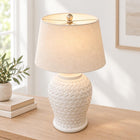
Start with the sofa and the main chair. A table lamp at one or both ends of the sofa gives you reading light and a warm pool of ambient glow at the same time. Scale matters here: a lamp that is too small for a full-size sofa disappears. The Glass Orb Table Lamp is about 31.1 in (79 cm) tall, with a clear glass base that keeps it looking light and an edged linen shade that diffuses the glow. It is a plug-in lamp, so it works anywhere there is an outlet. On a narrower side table or a console behind the sofa, a slimmer lamp keeps the proportions right.
Bounce light off the ceiling and into the corners
Dark corners are what make a lamp-lit room feel gloomy. An uplighting floor lamp in a corner sends light up to the ceiling, where it spreads back down as soft general light, which is the closest thing to a ceiling fixture without wiring one. A pale ceiling and walls help a lot. A mirror placed opposite a lamp is an old trick that still works: it doubles the glow without adding another light.
Add plug-in wall sconces
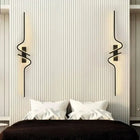
Wall lights free up table space and lift light off the furniture to eye level. If you can't hardwire, choose a plug-in model and plan a tidy route for the cord, for example with a paintable cord cover. The Rattan Swing Arm Wall Sconce is listed as plug-in, with a swing arm that projects 19.1 in (48.5 cm) from the wall, so you can pull it over an armchair to read and push it back afterwards. It comes as a single or a set of 2, which makes a matching pair either side of the sofa easy. For placement, see our guide on how high to hang wall sconces; in a living room, the center of the light usually sits 60–70 in (152–178 cm) from the floor.
Lighting ideas for a low-ceiling living room
With a low ceiling, roughly 8 ft (2.4 m) or less, the goal is to light the room without stealing headroom. A hanging pendant in the middle of the room usually ends up at head height and makes the ceiling feel even lower.
Choose a flush or low-profile ceiling light
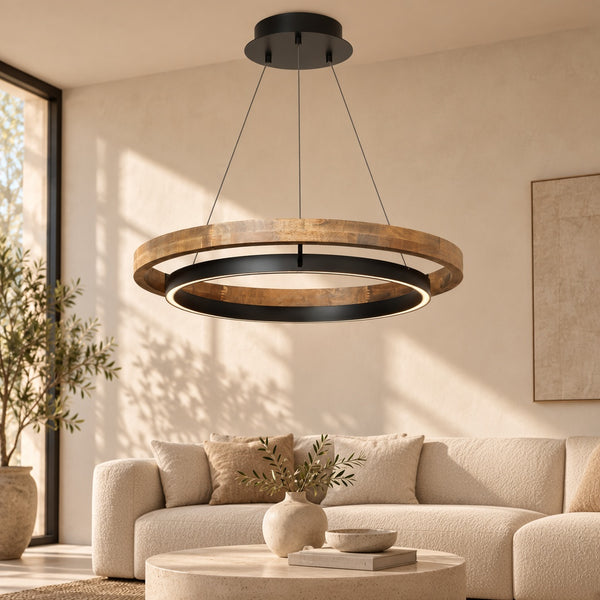
A flush mount sits close to the ceiling and spreads light outward. The Faux Travertine LED Ceiling Light is a slim faux travertine disc with a walnut-tone wood rim and integrated warm 3000K LED, in 11.8, 16.9 and 21.6 in (30, 43 and 55 cm) diameters. If you prefer glass, the Ribbed Glass Flush Mount Light is 14 in (about 36 cm) across and 6.5 in (16.5 cm) high, with ribbed glass that softens the light.
Light the walls, not just the floor
In a low room, lighting the vertical surfaces makes the space feel wider. Wall sconces, a lamp on a bookcase and light washing a textured wall all draw the eye outward instead of up to a ceiling that's close. Keep any hanging light out of walkways: the Dcorra Lighting Size Guide recommends at least 7 ft (210 cm) between the floor and the bottom of a light in walkways and open areas.
Lighting ideas for a high or vaulted living room ceiling
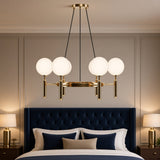
Tall ceilings have the opposite problem: light from far above spreads thinly and the room can feel cavernous at night. Here a chandelier earns its place, as long as it is big enough and hangs low enough to connect with the furniture.
Size the chandelier to the room
A simple rule of thumb: add the room's length and width in feet, and use that number in inches as the chandelier diameter. A 13 x 16 ft (4 x 5 m) living room works out at around 29 in, and the size guide suggests about 29–35 in (around 90 cm) for a room that size. In a tall room, many people go to the larger end of that range so the fixture doesn't look lost.
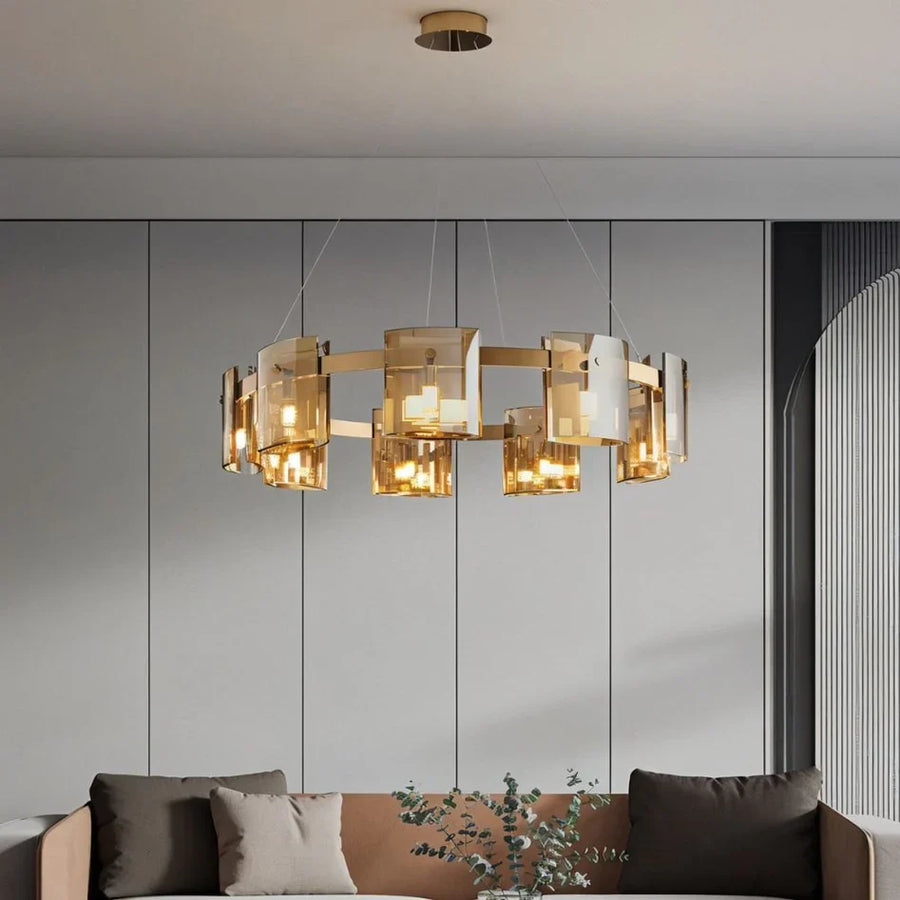
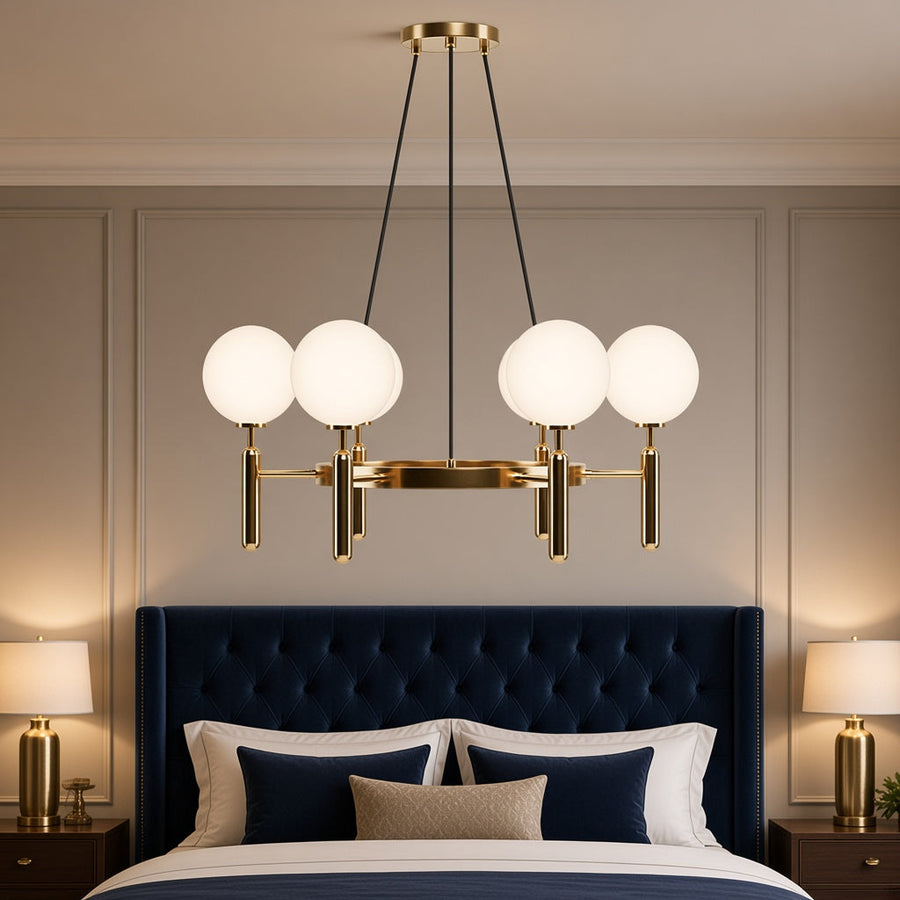
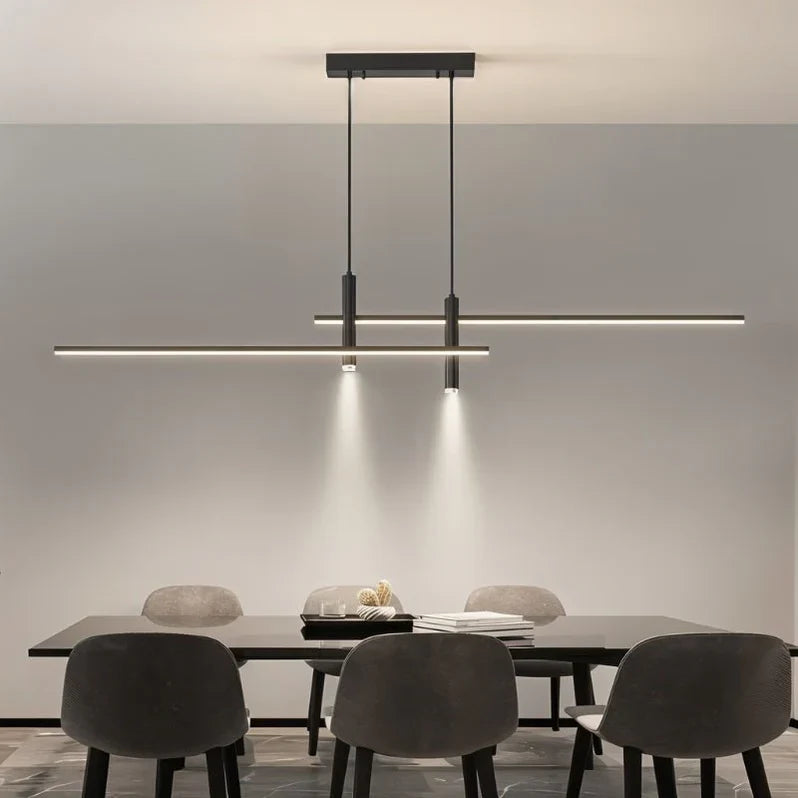
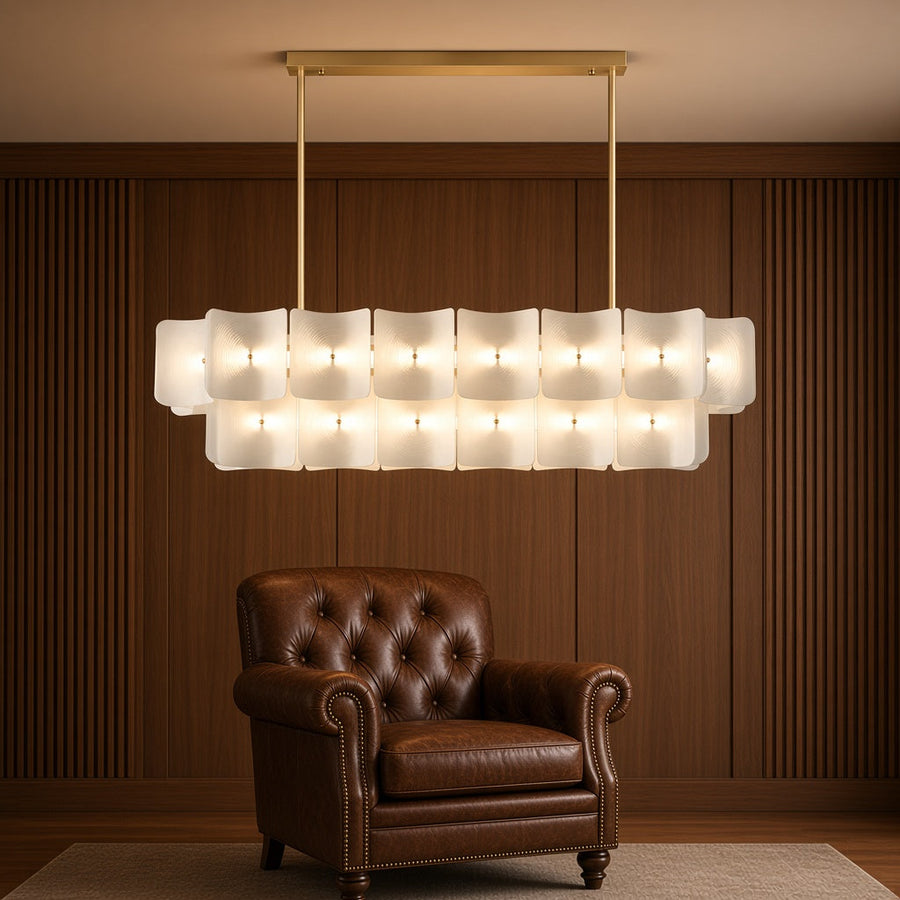
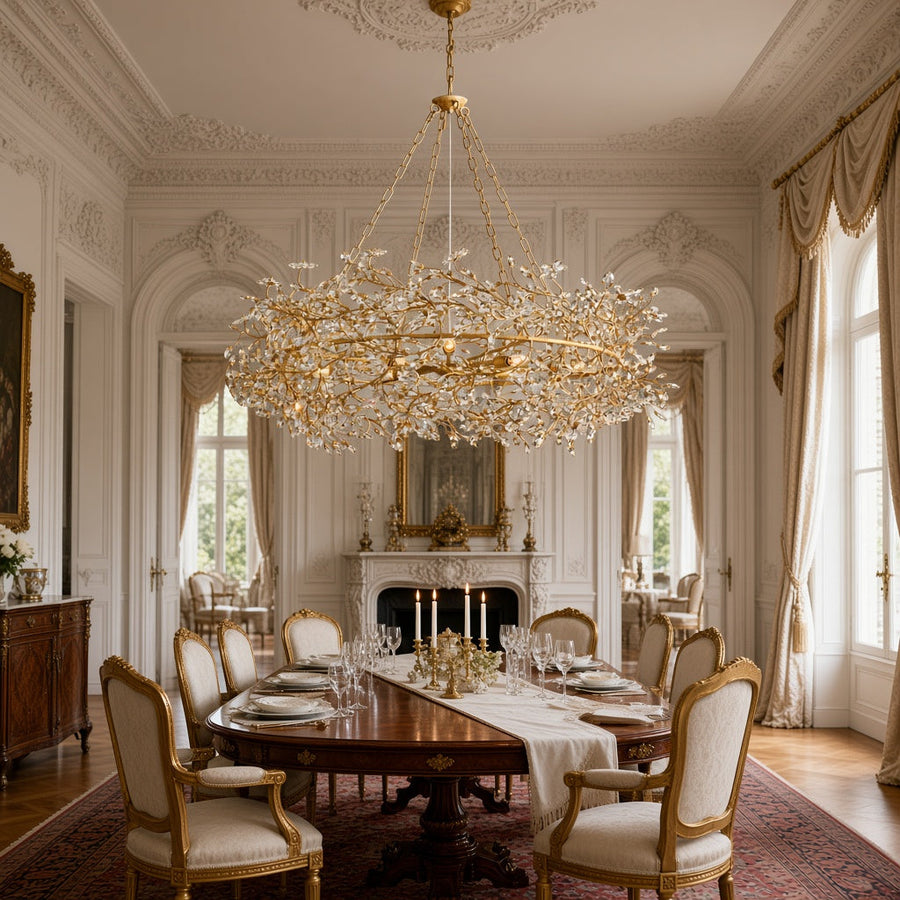
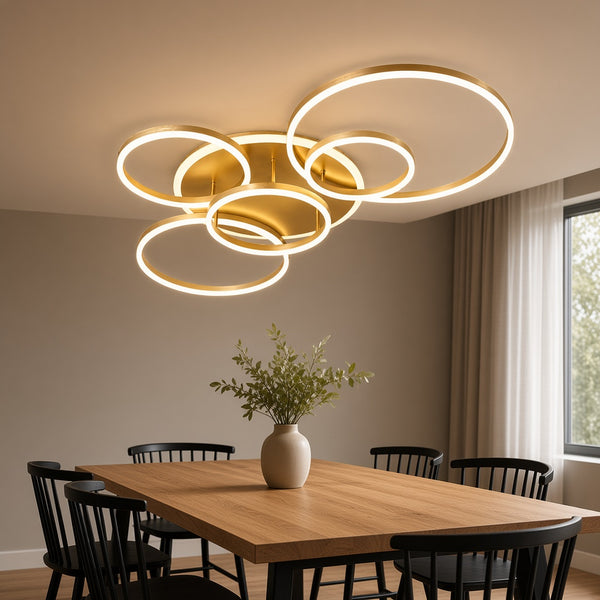
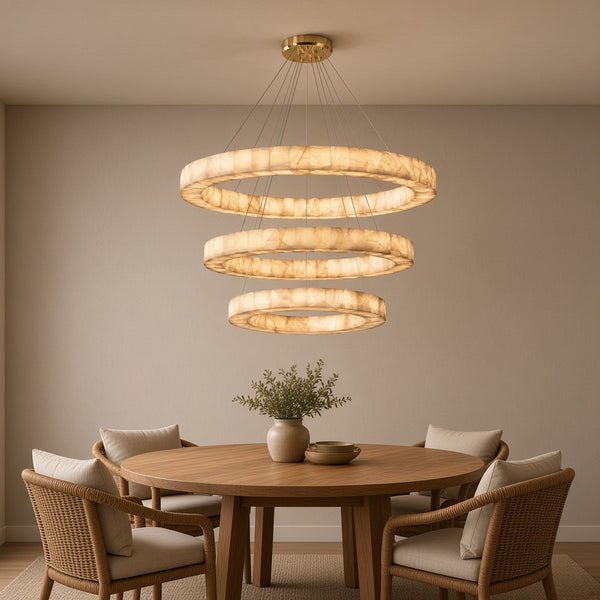
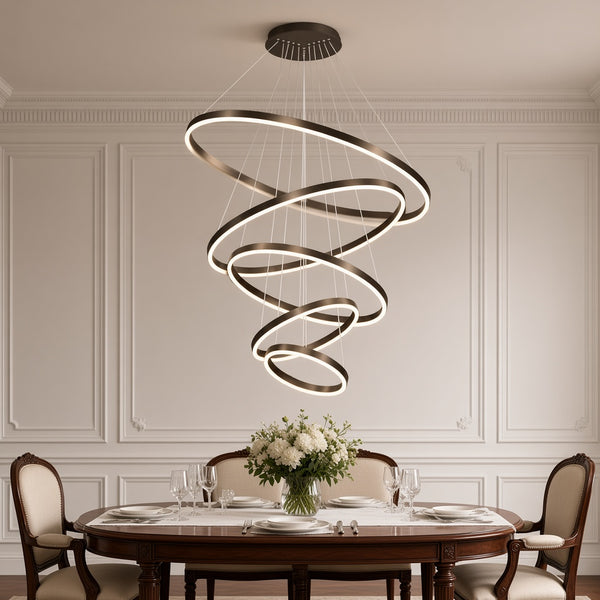
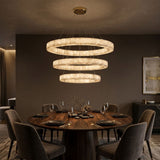
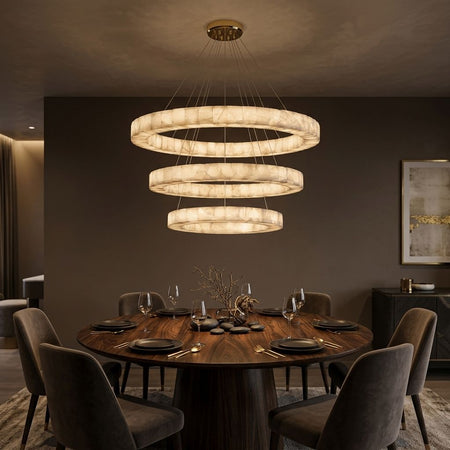
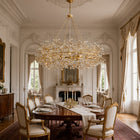
The Layered Glass Disc Chandelier comes in 23.6, 31.4 and 39.3 in (60, 80 and 100 cm) diameters, is dimmable, has a 59 in (150 cm) adjustable cord and is listed as compatible with sloped ceilings, a useful detail under a vaulted roof. For a more architectural look, the Floating LED Ring Chandelier can be ordered with one ring or layered with up to three, from 15.7 to 31.5 in (40 to 80 cm), and there is a remote-control version for adjusting brightness and color temperature. Layered rings fill tall vertical space nicely.
Hang it at the right height
Where people walk underneath, keep the bottom of the chandelier at least 7 ft (210 cm) above the floor. In a double-height room, it usually looks best hanging well below the ceiling, at a level that relates to the room you actually use rather than the roofline. Before ordering, check the drop length on the product page against your ceiling height, especially for very high ceilings. Then bring the light down to human scale with sconces and lamps, so the chandelier isn't doing all the work.
Small details that make the biggest difference
- Use warm light. Warm white, 2700–3000K, is the usual choice for living rooms. Our light colour guide explains the options, and recommends sticking to one colour within a room.
- Add dimming. A dimmer, or a fixture with a remote, lets one room work for both a bright afternoon and a quiet evening. Check that both the light and the bulb are dimmable.
- Switch lights separately. Lamps on their own switches or smart plugs let you build the mood one layer at a time.
- Avoid glare. You should not see a bare bulb from the sofa. Shades, diffusers and frosted glass keep the light comfortable.
- Light the dark corners first. One lamp in a forgotten corner often changes a room more than a brighter ceiling light.
If you're opening onto a dining area, our modern dining room lighting ideas cover the light over the table. And when you're ready to choose, explore the full living room lighting collection. Measure first: Dcorra accepts returns within 30 days of delivery, but return shipping is paid by the customer, so it is worth checking dimensions on the product page before you order.
Shopping for Black Friday? Code BLACKFRIDAY takes 25% off at Dcorra.
Frequently asked questions
How do you light a living room with no overhead lighting?
Spread several smaller sources around the room: table lamps by the sofa and chairs, an uplighting floor lamp in a dark corner to bounce light off the ceiling, and plug-in wall sconces at eye level. Warm bulbs and a mirror opposite a lamp help the light go further.
What is the best lighting for a living room with a low ceiling?
A flush or low-profile ceiling light for ambient light, plus wall sconces and lamps to light the walls. Avoid hanging pendants where people walk, and keep at least 7 ft (210 cm) from the floor to the bottom of any light in walkways.
What size chandelier do I need for my living room?
Add the room's length and width in feet and use the result in inches as the diameter. A 13 x 16 ft (4 x 5 m) room suits a chandelier of about 29–35 in (around 90 cm). See the Lighting Size Guide for more examples.
How high should a chandelier hang in a living room?
Where people walk underneath, leave at least 7 ft (210 cm) between the floor and the bottom of the light. In tall rooms, hang it well below the ceiling so it relates to the furniture, and check the drop length on the product page.
How many lights does a living room need?
There is no fixed number, but most living rooms feel best with at least three sources at different heights, so you have ambient, task and accent light. Larger rooms need more lamps spread around so no corner is left dark.